SAP Cloud Infrastructure is an SAP-operated IaaS cloud platform, used to run SAP’s cloud business and customer-facing deployments for SAP and non-SAP workloads. It is developed and operated with open-source technologies within SAP’s data center network, based on OpenStack and Kubernetes and supporting SAP S/4HANA and general-purpose applications. It offers compute, storage, and platform services that are accessible to SAP customers. == History == In 2012, SAP promoted aspects of cloud computing. In October 2012, SAP announced a platform as a service called the SAP Cloud Platform. In May 2013, a managed private cloud called the S/4HANA Enterprise Cloud service was announced. SAP Converged Cloud was announced in January 2015. SAP Converged Cloud was originally developed as SAP's internal standardized Infrastructure as a Service (IaaS) offering to support SAP’s cloud solutions. Originating from SAP Converged Cloud, SAP Cloud Infrastructure was developed and announced as SAP’s cloud computing offering that is provided for both SAP and customer workloads. In 2025, it had a global footprint of 15 regions and 29 data centers, encompassing more than 200,000 active VMs and over 6,000 hypervisors. In September 2025, SAP announced an expansion of its European “SAP Sovereign Cloud” portfolio, explicitly naming SAP Cloud Infrastructure (alongside SAP Sovereign Cloud On-Site) as part of the stack positioned for public sector and regulated environments. == Services and Features == SAP Cloud Infrastructure (SCI) is an infrastructure-as-a-service (IaaS) offering by SAP that provides virtual compute, storage, and networking services, together with identity, key management, and operational services. SCI follows a self-service model and is managed via APIs and a web-based user interface. === Compute === SCI provides virtual machine instances that can be provisioned from operating system images and selected in predefined sizes (“flavors”). It supports lifecycle operations such as create/modify/resize/delete, power control, and snapshots; instances can be organized into server groups to influence placement policies. === Storage === SCI provides persistent storage services including: Block storage (virtual volumes) with attach/detach to instances, online expansion, cloning, snapshots, and provisioning volumes from images or snapshots. Object storage (containers and objects) managed via API/CLI with access control lists (ACLs) and configurable redundancy options. File storage (shared file systems) with access controls, online resize, snapshots/restore, and replication across availability zones. === Networking === SCI provides software-defined networking (SDN) for tenant networks (networks, subnets, routers) and connectivity features such as floating IPs for public reachability. Network security controls include security groups and firewall policies; connectivity options include BGP-based VPN networking. === Load balancing and DNS === SCI includes managed load balancing for distributing traffic across backend instances and an authoritative DNS service (DNSaaS) with API-based management of DNS zones and records, including options for zone sharing/transfer across projects/tenants and service integrations for automated record creation. === Identity, access, and key management === SCI includes identity and access management for authentication/authorization in projects/tenants (for example token handling, role assignment, and credential management) and key/secrets management for storing and controlling access to secret material such as keys and certificates, including support for different backends (depending on configuration). === Cloud-native services === SCI includes a container image registry (image push/pull, access policies, and lifecycle controls) and an auto-scaling capability for file shares based on configurable rules. === Observability and audit === SCI includes metrics and audit logging capabilities for operational monitoring and for listing/filtering audit-relevant events across services. === Availability and service levels === SCI documentation describes availability-related features such as load balancing, storage redundancy options, and replication for file shares across availability zones. SAP cloud services are governed by contractual service-level agreements (SLA); SAP Cloud Infrastructure references an SLA supplement defining infrastructure-specific terms when referenced in order forms. === SAP cloud services === SAP cloud services can run on different underlying infrastructures, including SAP Cloud Infrastructure in addition to SAP NS2 or hyperscalers. SAP cloud solutions available on SAP Cloud Infrastructure include SAP Cloud ERP, SAP HCM, SAP Solutions for Spend Management, Supply Chain Management, Business Transformation Management, and SAP Business Technology Platform (including related analytics and business data solutions). For example, SAP HANA Cloud documentation lists SAP Cloud Infrastructure as one of the supported infrastructures alongside hyperscalers. === Sustainability === SAP describes sustainability initiatives for its data centers, including energy-efficient infrastructure (for example, advanced cooling systems and power management), renewable electricity usage where feasible, and operational practices such as recycling electronic waste and minimizing water usage. SAP also references environmental management and energy management standards such as ISO 14001 and ISO 50001 for its data center operations. SAP-owned data centers run with 100% renewable electricity and that renewable electricity has been used since 2014 to power SAP facilities including owned data centers and co-locations. == SAP Cloud Infrastructure for SAP Sovereign Cloud == SAP Sovereign Cloud is a portfolio of SAP solutions designed to help organizations adopt SAP cloud solutions such as the SAP Cloud ERP while maintaining control over data, infrastructure, and compliance in line with local laws and regulations. The portfolio offers multiple deployment options, including SAP Cloud Infrastructure and SAP Sovereign Cloud On-Site, alongside sovereign hyperscaler-based options such as via SAP NS2, and targets customers such as public-sector bodies and other highly regulated organizations. In Europe, SAP Cloud Infrastructure is an Infrastructure-as-a-Service (IaaS) deployment option within SAP Sovereign Cloud for SAP and customer / third party workloads, operated on SAP’s data center network and developed using open-source technologies, with customer data stored within the European Union. Sovereignty-related characteristics for the SAP Cloud Infrastructure include: EU footprint and ownership model: SAP-operated data centers in Germany include sites in St. Leon-Rot and Walldorf, and co-location sites in Frankfurt. EU AI Cloud: EU AI Cloud is a sovereign AI offering for Europe that provides secure, compliant environments for building and running AI, including governed access to auditable large language models from SAP and partners. It offers AI models on the SAP Cloud Infrastructure and SAP Business Technology Platform (SAP BTP), enabling deployment of AI applications and models on high-performance European infrastructure (including accelerator/GPU-based compute for AI workloads). Availability zones and secure interconnect: Three availability zones in three independent data centers in Germany, connected via SAP-owned fiber on SAP-owned property. Facility and security standards: ISO/IEC 27001 governance of delivery and operations of SAP cloud services and SAP-owned data centers. Additional facility and availability standards: EN 50600 availability class 3 (European data centre standard) and/or ISO/IEC 22237 availability class 3 (international equivalent). Technology foundation: Based on open-source cloud infrastructure framework (OpenStack) and Kubernetes, without dependencies on hyperscaler technologies. Sovereignty controls: Data sovereignty (data residency), operational sovereignty (administration and maintenance restricted to approved, security-cleared personnel), technical sovereignty (locally hosted control planes with separation via encryption or dedicated infrastructure), and legal sovereignty (use of locally based legal entities or those in approved countries). Classified information processing: Roadmap to meet high and very high requirements for handling classified or sensitive information under European regulatory and security regimes. Public-sector readiness and EU sovereignty assurance levels: Implemented to meet SEAL-3 (Digital Resilience) and SEAL-4 (Full Digital Sovereignty) of the European Commission’s Cloud Sovereignty Framework. Staffing constraints: Operations model selectable to restrict sensitive operations to vetted personnel from EU or NATO countries.
Artificial intelligence
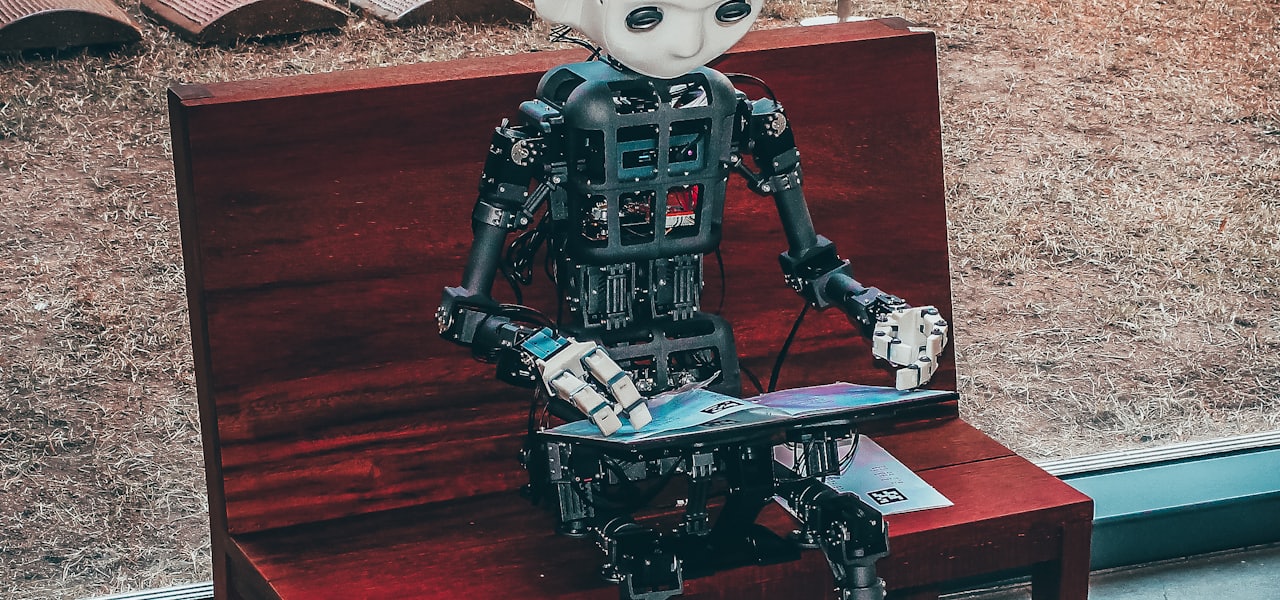
Artificial intelligence (AI) is the capability of computational systems to perform tasks typically associated with human intelligence, such as learning, reasoning, problem-solving, perception, and decision-making. It is a field of research in engineering, mathematics and computer science that develops and studies methods and software that enable machines to perceive their environment and use learning and intelligence to take actions that maximize their chances of achieving defined goals. High-profile applications of AI include advanced web search engines, chatbots, virtual assistants, autonomous vehicles, and play and analysis in strategy games (e.g., chess and Go). Since the 2020s, generative AI has become widely available to generate images, audio, and videos from text prompts. The traditional goals of AI research include learning, reasoning, knowledge representation, planning, natural language processing, and perception, as well as support for robotics. To reach these goals, AI researchers have used techniques including state space search and mathematical optimization, formal logic, artificial neural networks, and methods based on statistics, operations research, and economics. AI also draws upon psychology, linguistics, philosophy, neuroscience, and other fields. Some companies, such as OpenAI, Google DeepMind and Meta, aim to create artificial general intelligence (AGI) – AI that can complete virtually any cognitive task at least as well as a human. Artificial intelligence was founded as an academic discipline in 1956, and the field went through multiple cycles of optimism throughout its history, followed by periods of disappointment and loss of funding, known as AI winters. Funding and interest increased substantially after 2012, when graphics processing units began being used to accelerate neural networks, and deep learning outperformed previous AI techniques. This growth accelerated further after 2017 with the transformer architecture. In the 2020s, an AI boom has coincided with advances in generative AI, which allowed for the creation and modification of media. In addition to AI safety and unintended consequences and harms from the use of AI, ethical concerns, AI's long-term effects, and potential existential risks have prompted discussions of AI regulation. == Goals == The general problem of simulating (or creating) intelligence has been broken into subproblems. These consist of particular traits or capabilities that researchers expect an intelligent system to display. The traits described below have received the most attention and cover the scope of AI research. === Reasoning and problem-solving === Early researchers developed algorithms that imitated step-by-step reasoning that humans use when they solve puzzles or make logical deductions. By the late 1980s and 1990s, methods were developed for dealing with uncertain or incomplete information, employing concepts from probability and economics. Many of these algorithms are insufficient for solving large reasoning problems because they experience a "combinatorial explosion": They become exponentially slower as the problems grow. Even humans rarely use the step-by-step deduction that early AI research could model. They solve most of their problems using fast, intuitive judgments. Accurate and efficient reasoning is an unsolved problem. === Knowledge representation === Knowledge representation and knowledge engineering allow AI programs to answer questions intelligently and make deductions about real-world facts. Formal knowledge representations are used in content-based indexing and retrieval, scene interpretation, clinical decision support, knowledge discovery (mining "interesting" and actionable inferences from large databases), and other areas. A knowledge base is a body of knowledge represented in a form that can be used by a program. An ontology is the set of objects, relations, concepts, and properties used by a particular domain of knowledge. Knowledge bases need to represent things such as objects, properties, categories, and relations between objects; situations, events, states, and time; causes and effects; knowledge about knowledge (what we know about what other people know); default reasoning (things that humans assume are true until they are told differently and will remain true even when other facts are changing); and many other aspects and domains of knowledge. Among the most difficult problems in knowledge representation are the breadth of commonsense knowledge (the set of atomic facts that the average person knows is enormous); and the sub-symbolic form of most commonsense knowledge (much of what people know is not represented as "facts" or "statements" that they could express verbally). There is also the difficulty of knowledge acquisition, the problem of obtaining knowledge for AI applications. === Planning and decision-making === An "agent" is any entity (artificial or not) that perceives and takes actions in the world. A rational agent has goals or preferences and takes actions to make them happen. In automated planning, the agent has a specific goal. In automated decision-making, the agent has preferences—there are some situations it would prefer to be in, and some situations it is trying to avoid. The decision-making agent assigns a number to each situation (called the "utility") that measures how much the agent prefers it. For each possible action, it can calculate the "expected utility": the utility of all possible outcomes of the action, weighted by the probability that the outcome will occur. It can then choose the action with the maximum expected utility. In classical planning, the agent knows exactly what the effect of any action will be. In most real-world problems, however, the agent may not be certain about the situation they are in (it is "unknown" or "unobservable") and it may not know for certain what will happen after each possible action (it is not "deterministic"). It must choose an action by making a probabilistic guess and then reassess the situation to see if the action worked. Alongside thorough testing and improvement based on previous decisions, having an explanation for why the agent took certain decisions is a way to build trust, especially when the decisions have to be relied upon. In some problems, the agent's preferences may be uncertain, especially if there are other agents or humans involved. These can be learned (e.g., with inverse reinforcement learning), or the agent can seek information to improve its preferences. Information value theory can be used to weigh the value of exploratory or experimental actions. The space of possible future actions and situations is typically intractably large, so the agents must take actions and evaluate situations while being uncertain of what the outcome will be. A Markov decision process has a transition model that describes the probability that a particular action will change the state in a particular way and a reward function that supplies the utility of each state and the cost of each action. A policy associates a decision with each possible state. The policy could be calculated (e.g., by iteration), be heuristic, or it can be learned. Game theory describes the rational behavior of multiple interacting agents and is used in AI programs that make decisions that involve other agents. === Learning === Machine learning is the study of programs that can improve their performance on a given task automatically. It has been a part of AI from the beginning. There are several kinds of machine learning. Unsupervised learning analyzes a stream of data and finds patterns and makes predictions without any other guidance. Supervised learning requires labeling the training data with the expected answers, and comes in two main varieties: classification (where the program must learn to predict what category the input belongs in) and regression (where the program must deduce a numeric function based on numeric input). In reinforcement learning, the agent is rewarded for good responses and punished for bad ones. The agent learns to choose responses that are classified as "good". Transfer learning is when the knowledge gained from one problem is applied to a new problem. Deep learning is a type of machine learning that runs inputs through biologically inspired artificial neural networks for all of these types of learning. Computational learning theory can assess learners by computational complexity, by sample complexity (how much data is required), or by other notions of optimization. === Natural language processing === Natural language processing (NLP) allows programs to read, write and communicate in human languages. Specific problems include speech recognition, speech synthesis, machine translation, information extraction, information retrieval and question answering. Early work, based on Noam Chomsky's generative grammar and semantic networks, had difficulty with word-sense disambiguation unless
Data exhaust
Data exhaust (also exhaust data) is the trail of data generated as a by-product of users' online activity, behaviour, and transactions, rather than data they deliberately create or submit. It forms part of a broader category of unconventional data that also includes geospatial, network, and time-series data, and may be useful for predictive analytics. Data exhaust can take the form of cookies, temporary files, log files, clickstream records and stored preferences. Actions such as visiting a web page, following a link, or dwelling on an element may all generate exhaust data that is recorded without the user's active awareness. Unlike primary content — which the user intentionally creates — exhaust data is a passive side effect of interaction. A bank, for example, might treat the amounts and parties involved in a transaction as primary data, while secondary data could include whether the transaction was carried out at a cash machine rather than a branch. == Uses == Data exhaust collected by companies is often information that is not immediately useful in isolation, but can be aggregated and analysed to improve products, personalise content, identify trends, and support quality control. Companies may also store exhaust data for future analysis or sell it to third parties. Shoshana Zuboff has described this practice as a core mechanism of what she terms surveillance capitalism, in which behavioural data generated by users is converted into predictive products. Kosciejew notes that large quantities of often raw data are collected in this way, much of which is never analysed. == Medical exhaust data == Many medical devices — including pacemakers, dialysis machines and surgical cameras — generate exhaust data as a by-product of their operation. The majority of this data is never captured or analysed, and is typically discarded once a procedure ends or a device completes its routine monitoring cycle. The potential use of data generated by implanted devices such as pacemakers raises additional legal and ethical questions around ownership and consent. Using electronic health records for research also creates challenges because of the volume of data involved, creating a need for automated algorithms to process it. == Privacy and regulation == The collection and distribution of data exhaust is not in itself illegal in most jurisdictions, but its use raises questions of privacy and informed consent. Steps commonly taken to address these concerns include data anonymisation, offering users an opt-out from the sale of their data, and publishing explicit privacy policies that disclose what data is collected and how it is used.
Forking lemma
The forking lemma is any of a number of related lemmas in cryptography research. The lemma states that if an adversary (typically a probabilistic Turing machine), on inputs drawn from some distribution, produces an output that has some property with non-negligible probability, then with non-negligible probability, if the adversary is re-run on new inputs but with the same random tape, its second output will also have the property. This concept was first used by David Pointcheval and Jacques Stern in "Security proofs for signature schemes," published in the proceedings of Eurocrypt 1996. In their paper, the forking lemma is specified in terms of an adversary that attacks a digital signature scheme instantiated in the random oracle model. They show that if an adversary can forge a signature with non-negligible probability, then there is a non-negligible probability that the same adversary with the same random tape can create a second forgery in an attack with a different random oracle. The forking lemma was later generalized by Mihir Bellare and Gregory Neven. The forking lemma has been used and further generalized to prove the security of a variety of digital signature schemes and other random-oracle based cryptographic constructions. == Statement of the lemma == The generalized version of the lemma is stated as follows. Let A be a probabilistic algorithm, with inputs (x, h1, ..., hq; r) that outputs a pair (J, y), where r refers to the random tape of A (that is, the random choices A will make). Suppose further that IG is a probability distribution from which x is drawn, and that H is a set of size h from which each of the hi values are drawn according to the uniform distribution. Let acc be the probability that on inputs distributed as described, the J output by A is greater than or equal to 1. We can then define a "forking algorithm" FA that proceeds as follows, on input x: Pick a random tape r for A. Pick h1, ..., hq uniformly from H. Run A on input (x, h1, ..., hq; r) to produce (J, y). If J = 0, then return (0, 0, 0). Pick h'J, ..., h'q uniformly from H. Run A on input (x, h1, ..., hJ−1, h'J, ..., h'q; r) to produce (J', y'). If J' = J and hJ ≠ h'J then return (1, y, y'), otherwise, return (0, 0, 0). Let frk be the probability that FA outputs a triple starting with 1, given an input x chosen randomly from IG. Then frk ≥ acc ⋅ ( acc q − 1 h ) . {\displaystyle {\text{frk}}\geq {\text{acc}}\cdot \left({\frac {\text{acc}}{q}}-{\frac {1}{h}}\right).} === Intuition === The idea here is to think of A as running two times in related executions, where the process "forks" at a certain point, when some but not all of the input has been examined. In the alternate version, the remaining inputs are re-generated but are generated in the normal way. The point at which the process forks may be something we only want to decide later, possibly based on the behavior of A the first time around: this is why the lemma statement chooses the branching point (J) based on the output of A. The requirement that hJ ≠ h'J is a technical one required by many uses of the lemma. (Note that since both hJ and h'J are chosen randomly from H, then if h is large, as is usually the case, the probability of the two values not being distinct is extremely small.) === Example === For example, let A be an algorithm for breaking a digital signature scheme in the random oracle model. Then x would be the public parameters (including the public key) A is attacking, and hi would be the output of the random oracle on its ith distinct input. The forking lemma is of use when it would be possible, given two different random signatures of the same message, to solve some underlying hard problem. An adversary that forges once, however, gives rise to one that forges twice on the same message with non-negligible probability through the forking lemma. When A attempts to forge on a message m, we consider the output of A to be (J, y) where y is the forgery, and J is such that m was the Jth unique query to the random oracle (it may be assumed that A will query m at some point, if A is to be successful with non-negligible probability). (If A outputs an incorrect forgery, we consider the output to be (0, y).) By the forking lemma, the probability (frk) of obtaining two good forgeries y and y' on the same message but with different random oracle outputs (that is, with hJ ≠ h'J) is non-negligible when acc is also non-negligible. This allows us to prove that if the underlying hard problem is indeed hard, then no adversary can forge signatures. This is the essence of the proof given by Pointcheval and Stern for a modified ElGamal signature scheme against an adaptive adversary. == Known issues with application of forking lemma == The reduction provided by the forking lemma is not tight. Pointcheval and Stern proposed security arguments for Digital Signatures and Blind Signature using Forking Lemma. Claus P. Schnorr provided an attack on blind Schnorr signatures schemes, with more than p o l y l o g ( n ) {\displaystyle polylog(n)} concurrent executions (the case studied and proven secure by Pointcheval and Stern). A polynomial-time attack, for Ω ( n ) {\displaystyle \Omega (n)} concurrent executions, was shown in 2020 by Benhamouda, Lepoint, Raykova, and Orrù. Schnorr also suggested enhancements for securing blind signatures schemes based on discrete logarithm problem.
Copyright
A copyright is a type of intellectual property that gives its owner the exclusive legal right to copy, distribute, adapt, display, and perform a creative work, usually for a limited time. The creative work may be in a literary, artistic, educational, or musical form. Copyright is intended to protect the original expression of an idea in the form of a creative work, but not the idea itself. A copyright is subject to limitations based on public interest considerations, such as the fair use doctrine in the United States and fair dealing doctrine in the United Kingdom. Some jurisdictions require "fixing" copyrighted works in a tangible form. It is often shared among multiple authors, each of whom holds a set of rights to use or license the work, and who are commonly referred to as rights holders. These rights normally include reproduction, control over derivative works, distribution, public performance, and moral rights such as attribution. Copyrights can be granted by public law and are in that case considered "territorial rights". This means that copyrights granted by the law of a certain state do not extend beyond the territory of that specific jurisdiction. Copyrights of this type vary by country; many countries, and sometimes a large group of countries, have made agreements with other countries on procedures applicable when works "cross" national borders or national rights are inconsistent. Typically, the public law duration of a copyright expires 50 to 100 years after the creator dies, depending on the jurisdiction. Some countries require certain copyright formalities to establishing copyright, others recognize copyright in any completed work, without a formal registration. When the copyright of a work expires, it enters the public domain. == History == === Background === The concept of copyright developed after the printing press came into use in Europe in the 15th and 16th centuries. It was associated with a common law and rooted in the civil law system. The printing press made it much cheaper to produce works, but as there was initially no copyright law, anyone could buy or rent a press and print any text. Popular new works were immediately re-set and re-published by competitors, so printers needed a constant stream of new material. Fees paid to authors for new works were high and significantly supplemented the incomes of many academics. Printing brought profound social changes. The rise in literacy across Europe led to a dramatic increase in the demand for reading matter. Prices of reprints were low, so publications could be bought by poorer people, creating a mass audience. In German-language markets before the advent of copyright, technical materials, like academic papers and handbooks, were inexpensive and widely available; it has been suggested this contributed to Germany's industrial and economic success. === Conception === The concept of copyright first developed in England. In reaction to the printing of "scandalous books and pamphlets", the English Parliament passed the Licensing of the Press Act 1662, which required all intended publications to be registered with the government-approved Stationers' Company, giving the Stationers the right to regulate what material could be printed. The Statute of Anne, enacted in 1710 in England and Scotland, provided the first legislation to protect copyrights (but not authors' rights). The Copyright Act 1814 extended more rights for authors but did not protect British publications from being reprinted in the US. The Berne International Copyright Convention of 1886 finally provided protection for authors among the countries who signed the agreement, although the US did not join the Berne Convention until 1989. In the US, the Constitution grants Congress the right to establish copyright and patent laws. Shortly after the Constitution was passed, Congress enacted the Copyright Act of 1790, modeling it after the Statute of Anne. While the national law protected authors' published works, authority was granted to the states to protect authors' unpublished works. The most recent major overhaul of copyright in the US, the Copyright Act of 1976, extended federal copyright to works as soon as they are created and "fixed", without requiring publication or registration. State law continues to apply to unpublished works that are not otherwise copyrighted by federal law. This act also changed the calculation of copyright term from a fixed term (then a maximum of fifty-six years) to "life of the author plus 50 years". These changes brought the US closer to conformity with the Berne Convention, and in 1989 the United States further revised its copyright law and joined the Berne Convention officially. Copyright laws allow products of creative human activities, such as literary and artistic production, to be preferentially exploited and thus incentivized. Different cultural attitudes, social organizations, economic models and legal frameworks are seen to account for why copyright emerged in Europe and not, for example, in Asia. In the Middle Ages in Europe, there was generally a lack of any concept of literary property due to the general relations of production, the specific organization of literary production and the role of culture in society. The latter refers to the tendency of oral societies, such as that of Europe in the medieval period, to view knowledge as the product and expression of the collective, rather than to see it as individual property. However, with copyright laws, intellectual production comes to be seen as a product of an individual, with attendant rights. The most significant point is that patent and copyright laws support the expansion of the range of creative human activities that can be commodified. This parallels the ways in which capitalism led to the commodification of many aspects of social life that earlier had no monetary or economic value perse. Copyright has developed into a concept that has a significant effect on nearly every modern industry, including not just literary work, but also forms of creative work such as sound recordings, films, photographs, software, and architecture. === National copyrights === Often seen as the first real copyright law, the 1709 British Statute of Anne gave authors and the publishers to whom they did chose to license their works, the right to publish the author's creations for a fixed period, after which the copyright expired. It was "An Act for the Encouragement of Learning, by Vesting the Copies of Printed Books in the Authors or the Purchasers of such Copies, during the Times therein mentioned." The act also alluded to individual rights of the artist. It began: "Whereas Printers, Booksellers, and other Persons, have of late frequently taken the Liberty of Printing ... Books, and other Writings, without the Consent of the Authors ... to their very great Detriment, and too often to the Ruin of them and their Families:". A right to benefit financially from the work is articulated, and court rulings and legislation have recognized a right to control the work, such as ensuring that the integrity of it is preserved. An irrevocable right to be recognized as the work's creator appears in some countries' copyright laws. The Copyright Clause of the United States, Constitution (1787) authorized copyright legislation: "To promote the Progress of Science and useful Arts, by securing for limited Times to Authors and Inventors the exclusive Right to their respective Writings and Discoveries." That is, by guaranteeing them a period of time in which they alone could profit from their works, they would be enabled and encouraged to invest the time required to create them, and this would be good for society as a whole. A right to profit from the work has been the philosophical underpinning for much legislation extending the duration of copyright, to the life of the creator and beyond, to their heirs. Yet scholars like Lawrence Lessig have argued that copyright terms have been extended beyond the scope imagined by the Framers. Lessig refers to the Copyright Clause as the "Progress Clause" to emphasize the social dimension of intellectual property rights. The original length of copyright in the United States was 14 years, and it had to be explicitly applied for. If the author wished, they could apply for a second 14‑year monopoly grant, but after that the work entered the public domain, so it could be used and built upon by others. === Continental law === In many jurisdictions of the European continent, comparable legal concepts to copyright did exist from the 16th century on but did change under Napoleonic rule into another legal concept: authors' rights or creator's right laws, from French: droits d'auteur and German Urheberrecht. In many modern-day publications the terms copyright and authors' rights are being mixed, or used as translations, but in a juridical sense the legal concepts do essentially differ. Authors' rights are, generally speaking,
Probiv
Probiv (Russian: пробив, literally "to pierce" or "to punch through") is an illicit data market operating primarily in Russia, where personal information from restricted government and corporate databases is bought and sold through networks of corrupt officials and insiders. The probiv market operates as a parallel information economy built on corrupt officials from various sectors including traffic police, banks, telecommunications companies, and security services who sell access to restricted databases. For fees ranging from as little as $10 to several hundred dollars, buyers can obtain passport numbers, addresses, travel histories, vehicle registrations, and telecommunications records. The market operates through various channels, including specialized Telegram bots and darknet forums. == Notable uses == Probiv services have been utilized by diverse actors for various purposes. Investigative journalists have used the market to conduct high-profile investigations, including tracing the FSB unit allegedly behind the poisoning of Alexei Navalny. Russian police and security services themselves have routinely used the black market to track activists and opposition figures. Since Russia's invasion of Ukraine, Ukrainian intelligence services have exploited the market to identify Russian military officials. == Government response == In late 2024, Russian authorities introduced legislation imposing penalties of up to ten years in prison for accessing or distributing leaked data. Several operators of probiv services, including the teams behind Usersbox and Solaris, have been arrested. However, the crackdown appears to have had unintended consequences. Many operators have relocated their businesses abroad, where they operate with fewer constraints. Some services that previously cooperated with Russian authorities have severed those ties and moved staff out of the country.
Telenet
Telenet was an American commercial packet-switched network which went into service in August 16, 1975. It was the first FCC-licensed public data network in the United States. Various commercial and government interests paid monthly fees for dedicated lines connecting their computers and local networks to this backbone network. Free public dialup access to Telenet, for those who wished to access these systems, was provided in hundreds of cities throughout the United States. == History == After establishing that commercial operation of "value added carriers" was legal in the U.S., Bolt Beranek and Newman (BBN), who were the private contractors for constructing packet switching nodes (Interface Message Processor) for the ARPANET, set out to create a private sector version. The original founding company, Telenet Inc., was established by BBN. In January 1975, Telenet Communications Corporation announced that they had acquired the necessary venture capital after a two-year quest. Initially, Bob Kahn was the first President of Telenet; he then moved to ARPA as Larry Roberts left to become President of the company. Barry Wessler also joined from ARPA. On August 16 of the same year they began operating the first public data network. The network offered an email service called Telemail. Telenet had its first offices in downtown Washington, D.C., then moved to McLean, Virginia. It was acquired by GTE in 1979, and then moved to offices in Reston, Virginia. It was later acquired by Sprint and called "Sprintnet". Sprint migrated customers from Telenet to the modern-day Sprintlink IP network, one of many networks composing today's Internet. == Coverage == Originally, the public network had switching nodes in seven US cities: Washington, D.C. (network operations center as well as switching) Boston, Massachusetts New York, New York Chicago, Illinois Dallas, Texas San Francisco, California Los Angeles, California The switching nodes were fed by Telenet Access Controller (TAC) terminal concentrators both colocated and remote from the switches. By 1980, there were over 1000 switches in the public network. At that time, the next largest network using Telenet switches was that of Southern Bell, which had approximately 250 switches. In 1977, Telenet added a London node and a Network Control Centre in a London building of Britain's Post Office Telecommunications. == Internal network technology == Telenet initially used a proprietary virtual connection host interface. The network used statically defined hop-by-hop routing, using Prime commercial minicomputers as switches, but then migrated to a purpose-built multiprocessing switch based on 6502 microprocessors. Among the innovations of this second-generation switch was a patented arbitrated bus interface that created a switched fabric among the microprocessors. By contrast, a typical microprocessor-based system of the time used a bus; switched fabrics did not become common until about twenty years later, with the advent of PCI Express and HyperTransport. Most interswitch lines ran at 56 kbit/s, with a few, such as New York-Washington, at T1 (i.e., 1.544 Mbit/s). Originally, the switching tables could not be altered separately from the main executable code, and topology updates had to be made by deliberately crashing the switch code and forcing a reboot from the network management center. Improvements in the software allowed new tables to be loaded, but the network never used dynamic routing protocols. Multiple static routes, on a switch-by-switch basis, could be defined for fault tolerance. Network management functions continued to run on Prime minicomputers. Roberts and Barry Wessler joined the international effort to standardize the a protocol for packet-switched data communication based on virtual circuits shortly before it was finalized. The CCITT proposal for X.25 was being prepared by Rémi Després and other international experts. A few minor changes, which complemented the proposed specification, were accommodated to enable Telenet to join the agreement. Telenet adopted X.25 shortly after the protocol was published in March 1976. Its X.25 host interface was the first in the industry. The main internal protocol was a proprietary variant on X.75; Telenet also ran standard X.75 gateways to other packet switching networks. == Accessing the network == === Basic asynchronous access === Users could use modems on the Public Switched Telephone Network to dial TAC ports, calling either from "dumb" terminals or from computers emulating such terminals. Organizations with a large number of local terminals could install a TAC on their own site, which used a dedicated line, at up to 56 kbit/s, to connect to a switch at the nearest Telenet location. Dialup modems supported had a maximum speed of 1200 bit/s, and later 4800 bit/s. For example, a customer in NYC could dial into the local number, then type in a command similar to: which would connect (that "c") them to a computer system designated as number "555" located in the same vicinity as the standard telephone "area code" 301. One significant customer was an early (what would now be called) internet service provider The Source which had their equipment in Mclean, Va. Telenet offered a much lower nighttime rate when there were few corporate customers, and this let The Source set up a modestly priced offering to tens of thousands of customers. Another prominent customer in the 1980s was Quantum Link (now AOL). === Other access protocols === Telenet supported remote concentrators for IBM 3270 family intelligent terminals, which communicated, via X.25 to Telenet-written software that ran in IBM 370x series front-end processors. Telenet also supported Block Mode Terminal Interfaces (BMTI) for IBM Remote Job Entry terminals supporting the 2780/3780 and HASP Bisync protocols. === PC Pursuit === In the late 1980s, Telenet offered a service called PC Pursuit. For a flat monthly fee, customers could dial into the Telenet network in one city, then dial out on the modems in another city to access bulletin board systems and other services. PC Pursuit was popular among computer hobbyists because it sidestepped long-distance charges. In this sense, PC Pursuit was similar to the Internet, allowing any user to call any system as if it were local. On connection to the network, the user entered a 5-letter code for the target city they wished to call. This consisted of a 2-letter state code and a 3-letter acronym for the city. For instance, to call a system in Cleveland, Ohio, the user would enter the code OHCLV, for "OHio", "CLeVeland". Once connected, the user could dial out to any local number, and the system simulated a direct connection between the two endpoints.